வீர வாயில்
Veera Vaayil
At the gate of heroes, a civilisation remembers its fire. Told in Purananuru register — without ever becoming nostalgic. The blood here is present tense.
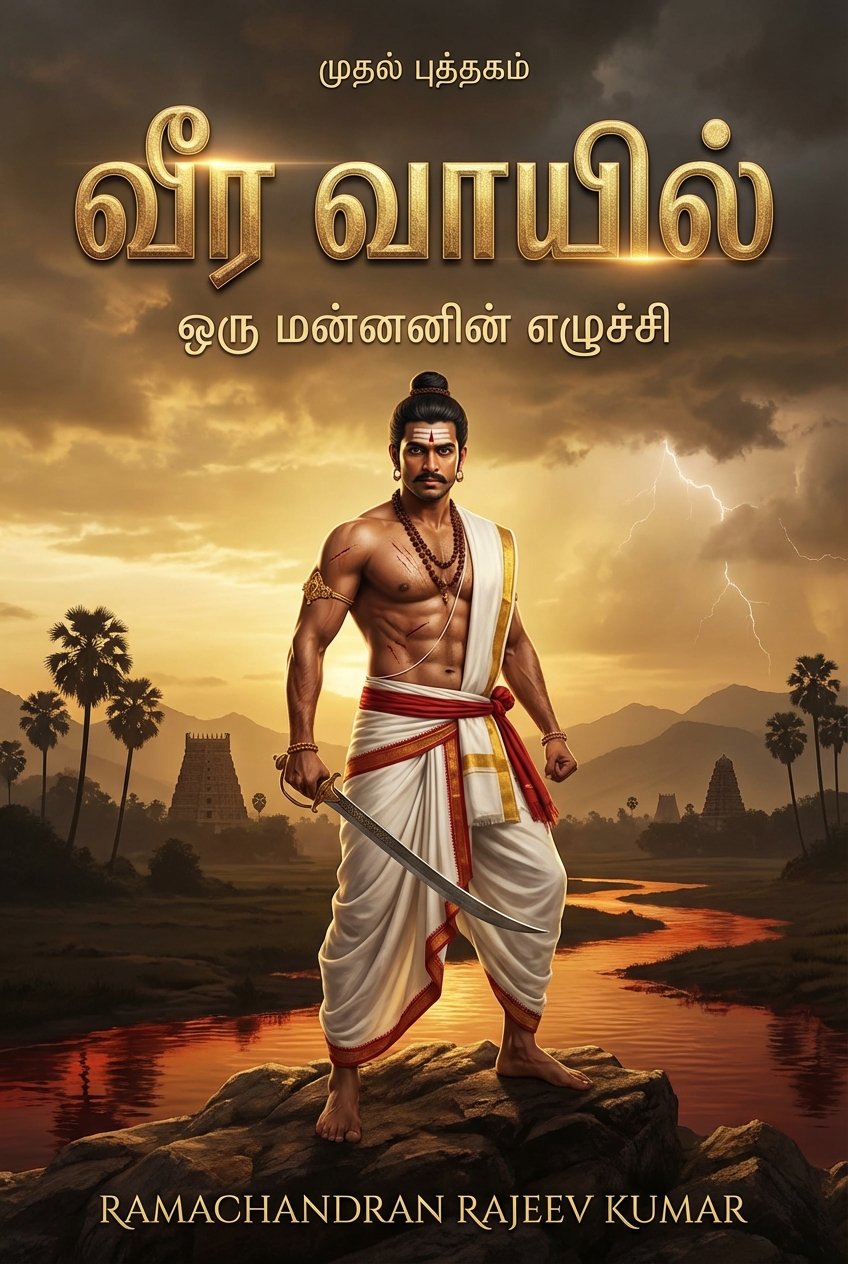
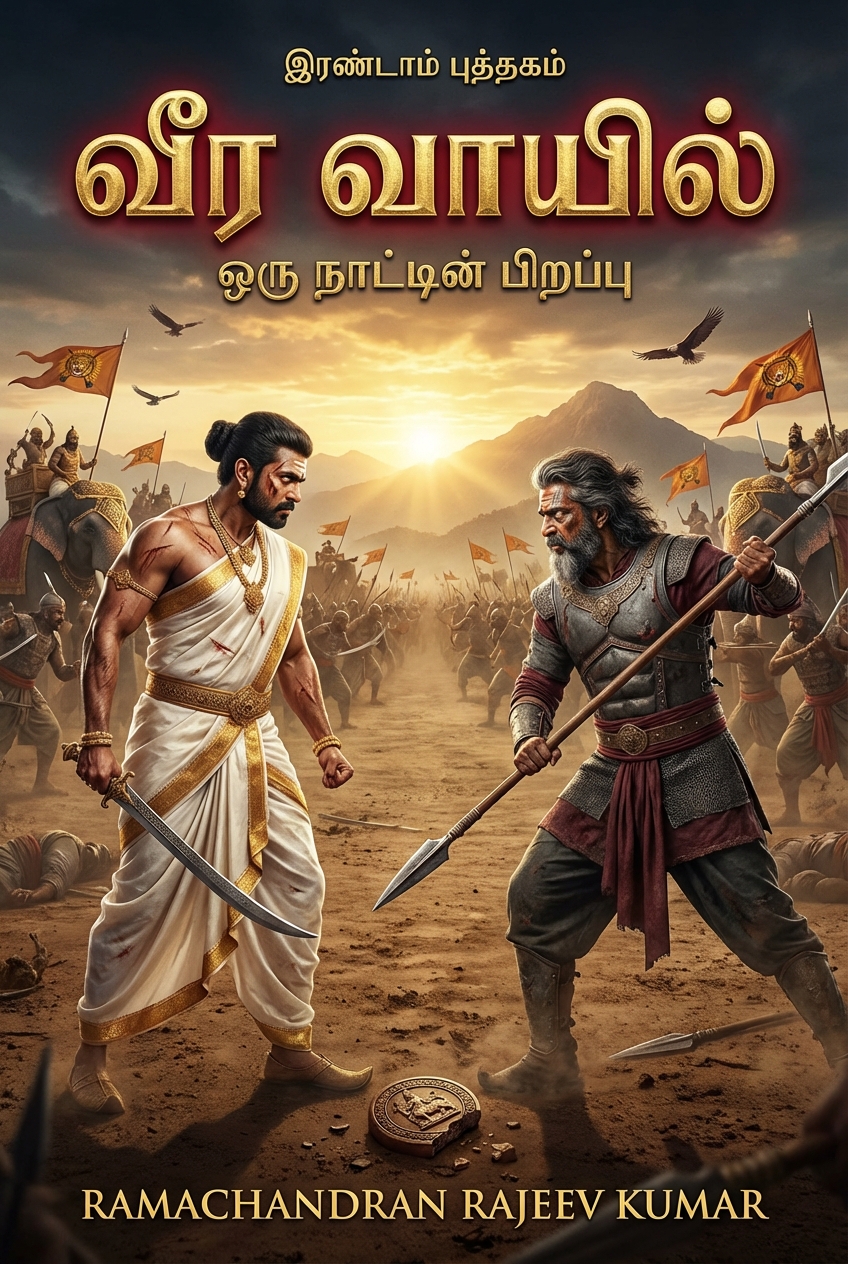
A war told by those who survived it.
Veera Vaayil is less a battle than a remembering. A village of ancestral warriors, a ritual bard, and the long silence that follows valour.
The story opens on a harvest. Before the scythe, there was a sword. Before the song, there was a cry. The work traces the shape of both — the field that feeds, the weapon that defends — and the breath held between them that is called a people.
The Harvest
The village before the war. Fields, oxen, oil lamps. A song rises from the threshing floor — a woman's voice, an ancestor's voice, carried on veena.
The PreBattle
The hours before first steel. Whispered vows, rubbed shoulders, sharpened iron. The film's longest stretch of restraint — because valour is largely waiting.
The Veera Vaayil
The gate where heroes are named. Not a triumphal arch, but the threshold between those who come back and those who do not. A sacred place to remember them.
Sound of the Epic
எழு! போர்முரசே எழு!
Ezhu! Pormurase Ezhu!
“Rise! O war-drum, rise!” The overture — a summoning that wakes a village, a generation, an ancestry.
இரு தீ ஒரு சுடர்
Iru Thee Oru Sudar
“Two fires, one flame.” The same song carried twice — once as a duet, once as a solo when one voice stands alone.
“வாளோடு முன் தோன்றிய மூத்த குடி வாழ்ந்த பூமி”
“An ancient people, who stepped forth with a sword, lived on this earth.”